Best Antwerp City Pass: 2026 Comparison Guide
Is the Antwerp City Card worth it in 2026? Verified 24h, 48h and 72h prices, honest break-even math and when paying as you go beats the card.
On this page
Antwerp City Card Comparison: Is It Worth It in 2026?
Updated June 2026. Antwerp has one official tourist card — the Antwerp City Card — available in 24-hour, 48-hour and 72-hour versions. It bundles free entry to 16+ museums and churches with unlimited De Lijn public transport. The question is not which card to pick (there is only one family of passes here), but whether any duration of it is worth buying at all for your specific itinerary.
We priced out every included attraction at 2026 à-la-carte rates and ran three realistic traveller scenarios. Short answer: the 48-hour City Card pays for itself clearly if you are a culture-focused visitor hitting museums for two days. The 24-hour card is a tighter call that only works if you pack your day aggressively. The 72-hour version makes sense for slow travellers who want to spread out and still keep hitting the museum circuit into day three. One critical update for 2026: the Rubenshuis (Rubens House) is closed for major renovation and will not fully reopen until 2030 — the Rubens Experience with the garden and library is partially open, but the historic house itself is shut. If the Rubenshuis is your main reason to visit Antwerp, plan your card purchase around that fact.
Free guide: Is the City Pass Worth It?
Our quick-decision checklist for European city passes — the value math, what to watch for in the fine print, and when paying per attraction beats the pass.
Key Takeaways
- The Antwerp City Card costs €45 (24h), €55 (48h) or €65 (72h) in 2026 — all verified via the official Antwerp tourism site.
- Free inclusions cover MAS, Plantin-Moretus, Cathedral of Our Lady, DIVA, Red Star Line, Snijders&Rockox House, and unlimited De Lijn tram/bus — but NOT Antwerp Zoo (discount only).
- The Rubenshuis is closed until approximately 2030 for renovation; only the Rubens Experience (garden + library) is accessible in 2026.
- The 48-hour card breaks even after roughly four included museums plus two days of transport — achievable for most first-time visitors.
- Day-trippers and visitors who prioritise shopping, dining, or street wandering over museums will almost certainly save money skipping the card entirely.
How the Antwerp City Card Works
The Antwerp City Card is a time-based pass: it starts counting from the moment you first use it and runs continuously until the duration expires. A 48-hour card activated on a Tuesday at 10:00 expires on Thursday at 10:00, whether you slept, ate, or spent eight hours on a train in between. This is the most important practical point — do not activate your card on a late evening if you plan to use it heavily the next morning.
The card is digital, delivered via the Antwerp City Card app (iOS and Android). You download the app, add your card, and show the screen at museum entrances. No printing required. The app also lists current opening hours and alerts for temporary closures, which is useful because Antwerp's municipal museums occasionally close for private events.
Transport coverage is the De Lijn network within Antwerp: all city trams and buses. This does not include the Waterbus ferry to the left bank (a separate ticket at approximately €1), nor does it include NMBS national rail. If you are arriving at Antwerp Centraal by Thalys or IC train, your rail ticket covers that leg — the De Lijn pass kicks in from the moment you step onto a tram outside the station.
One detail worth flagging: the card covers free entry to the permanent collections of included museums. Temporary exhibitions at MAS and other venues typically require a separate ticket, even for cardholders. Check whether your target exhibition is permanent or temporary before assuming you are covered.
Children under 12 enter all municipal Antwerp museums for free regardless of whether you hold a City Card. If you are travelling with young children, the card's per-adult price calculation changes — you are buying it purely for the adult's museum access and the transport coverage, not for the children's tickets.
Antwerp City Card Comparison Table 2026
Antwerp offers one card family at three durations, plus a pay-as-you-go baseline. The table below covers all options. Prices are verified 2026 figures. Transport coverage means unlimited De Lijn trams and buses within Antwerp city limits.
| Pass | Price (€, 2026) | Validity | Type | Key inclusions | Transport incl.? | Skip-the-line? | Digital? | Our rating | Buy |
|---|---|---|---|---|---|---|---|---|---|
| Antwerp City Card 24h | €45 | 24 hours | Time-based | 16+ museums/churches (MAS, Cathedral, Plantin-Moretus, DIVA, Red Star Line, Snijders&Rockox, Steen, more) + unlimited De Lijn | Yes | No | Yes (app) | 3/5 — tight math, heavy packing required | Official site |
| Antwerp City Card 48h | €55 | 48 hours | Time-based | Same 16+ museums/churches + unlimited De Lijn | Yes | No | Yes (app) | 4/5 — best value for most visitors | Official site |
| Antwerp City Card 72h | €65 | 72 hours | Time-based | Same 16+ museums/churches + unlimited De Lijn | Yes | No | Yes (app) | 4/5 — suits slow travellers doing 3 full days | Official site |
| No pass / pay-as-you-go | €0 | N/A | N/A | Pay per attraction; De Lijn single ~€2.50, day ticket ~€7.50 | No (pay-per-ride) | N/A | N/A | 5/5 — best for day-trippers / walkers / low museum count | De Lijn app or station machine |
What the Antwerp City Card Includes in 2026
The card covers free entry to the permanent collections of Antwerp's main municipal museums plus several churches. The headline inclusions we priced for the math section below are:
- MAS — Museum aan de Stroom: The landmark harbour museum with rooftop panoramic views. Free permanent collection entry. Rooftop access is always free, with or without the card.
- Museum Plantin-Moretus: UNESCO-listed printing-press museum, one of the most historically significant buildings in Belgium. À-la-carte adult ticket €12.
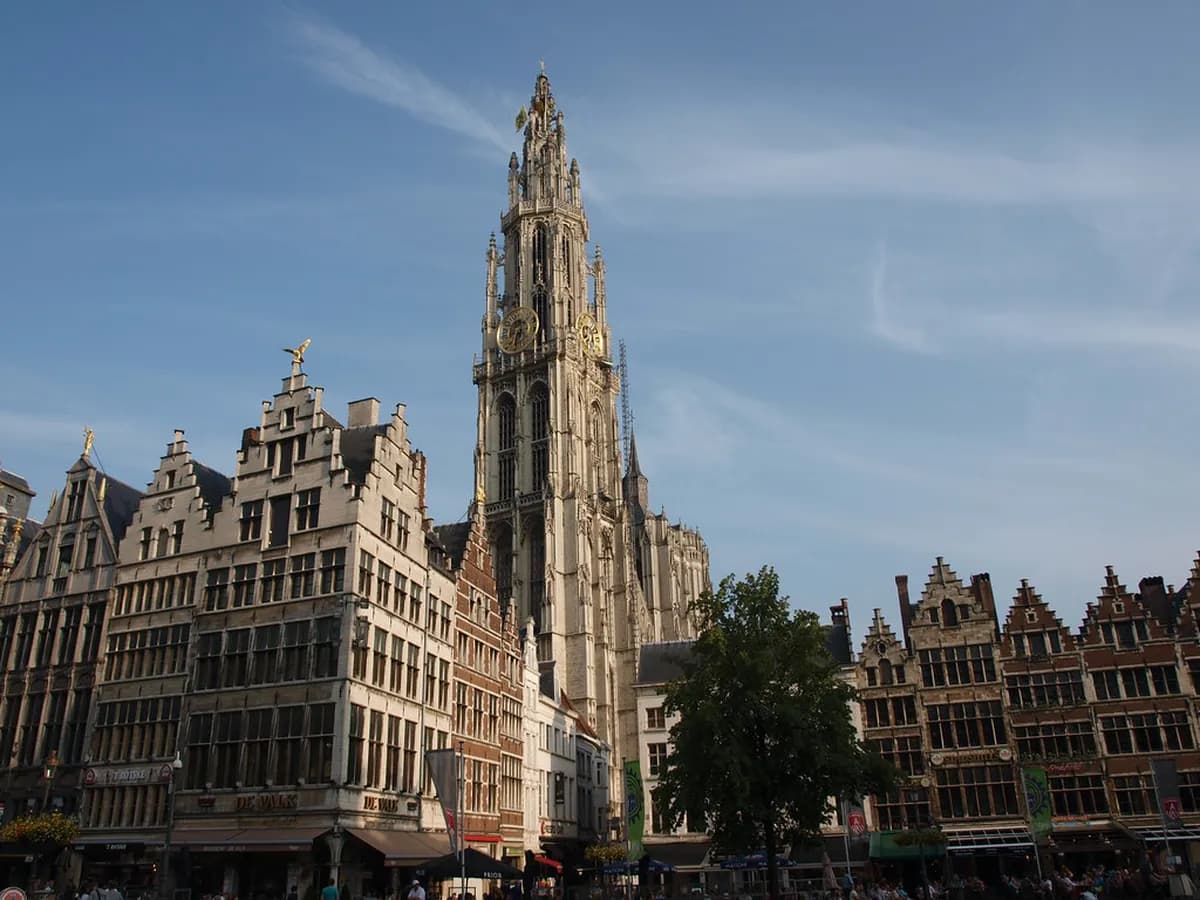
- Cathedral of Our Lady (Onze-Lieve-Vrouwekathedraal): Home to four original Rubens altarpieces, including The Descent from the Cross. À-la-carte adult entry €12.
- DIVA — Antwerp Home of Diamonds: The diamond and jewellery museum in the heart of the diamond district. À-la-carte adult ticket €12.
- Red Star Line Museum: Emigration history museum documenting the millions who sailed from Antwerp to America. Adult ticket approximately €8–€10 à la carte.
- Snijders&Rockox House: Two beautifully preserved patrician houses of Rubens' contemporaries, now a museum. Normally free or very low admission, but covered by the card.
- Het Steen (Steen Castle): The medieval riverside fortress, now Antwerp's visitor experience centre. Included in the card.
- Unlimited De Lijn trams and buses within Antwerp: equivalent to approximately €7.50 per day if bought as a standalone De Lijn day ticket.
What the Antwerp City Card Does NOT Include
- Antwerp Zoo (Zoo Antwerpen): NOT free. Cardholders receive a discount, but a full adult ticket costs around €29 (2026, varies by day; booking online saves approximately €2). The Zoo is directly adjacent to Antwerp Centraal station and is one of the most visited attractions in the city — the fact that it is only discounted, not free, is a significant gap.
- Rubenshuis (Rubens House) — CLOSED: The historic house is under major renovation and will not reopen until 2030. The Rubens Experience (garden, library, small exhibits) is partially accessible. If Rubens' studio and private rooms are your priority, this visit is simply not possible in 2026.
- Temporary exhibitions: All included museums offer free permanent-collection entry. Temporary or blockbuster exhibitions require a separate ticket even for cardholders.
- Waterbus / ferry: The Antwerp Waterbus across the Scheldt is not covered. A single crossing costs approximately €1.
- NMBS national rail: Trains to Ghent, Brussels, or Bruges are not included. Plan those legs separately.
- Skip-the-line access: The card provides no queue-jump privileges. The Cathedral of Our Lady and MAS can have queues in peak summer — arrive early or visit on a weekday morning.
Worked Worth-It Math: Three Scenarios, 2026 Prices
We priced these in June 2026 using official and verified ticket prices. Here is what the three most common visitor types actually spend.
Scenario A: Culture-packed two-day visitor (48h card)
This visitor spends two days in Antwerp hitting the main museum circuit — the most common profile for a Belgian city break.
| Attraction / Item | À-la-carte 2026 price | With 48h City Card |
|---|---|---|
| Cathedral of Our Lady | €12 | Free |
| MAS — Museum aan de Stroom | €12 | Free |
| Museum Plantin-Moretus | €12 | Free |
| Red Star Line Museum | ~€9 | Free |
| DIVA diamond museum | €12 | Free |
| De Lijn transport (2 days × €7.50) | €15 | Included |
| Total à-la-carte | €72 | €55 (card) |
Verdict: saving of €17 on this itinerary. The 48h card wins clearly. A culture-focused visitor hitting those five attractions across two days recovers €17 over pay-as-you-go. Add Het Steen or Snijders&Rockox House and the saving widens further. The 48-hour card is the right choice for this profile.
Scenario B: 24-hour day-tripper (the card loses)
This visitor arrives for a single day, mainly wants to stroll the Grote Markt, explore the diamond district on foot, and visit one museum. They are not museum-hopping — they want to feel the city.
| Attraction / Item | À-la-carte 2026 price | With 24h City Card |
|---|---|---|
| Cathedral of Our Lady | €12 | Free |
| De Lijn transport (1 day ticket) | €7.50 | Included |
| Antwerp Zoo (wanted to visit) | ~€29 | Discount only (~€24 after discount) |
| Total à-la-carte (excl. Zoo) | €19.50 | €45 (card) + ~€24 Zoo = €69 |
Verdict: the 24h card loses badly in this scenario. The day-tripper pays €45 for the card, saves €19.50 in attraction entry, and still pays ~€24 for the Zoo separately — a total of €69 versus €48.50 pay-as-you-go. The card only makes financial sense for the 24-hour visitor who visits at least three or four museums. For a wander-and-one-museum day, pay as you go.
Scenario C: 72-hour slow traveller
This visitor spends three full days in Antwerp, does the museum circuit across days one and two at a leisurely pace, and uses day three for neighbourhood exploration with transport. They add the Snijders&Rockox House and the Steen Castle visitor experience on day three.
| Attraction / Item | À-la-carte 2026 price | With 72h City Card |
|---|---|---|
| Cathedral of Our Lady | €12 | Free |
| MAS | €12 | Free |
| Plantin-Moretus | €12 | Free |
| Red Star Line | ~€9 | Free |
| DIVA | €12 | Free |
| Snijders&Rockox House | ~€6 | Free |
| Het Steen | ~€8 | Free |
| De Lijn transport (3 days × €7.50) | €22.50 | Included |
| Total à-la-carte | €93.50 | €65 (card) |
Verdict: saving of €28.50. The 72h card wins comfortably. The slow traveller spreading seven attractions over three days at a relaxed pace clears the break-even point with €28 to spare. This is the cleanest case for the 72-hour card — unhurried, comprehensive, and meaningfully cheaper than paying at the door.
The honest break-even rule
For any duration, the card breaks even when your museum visits plus transport savings equal the card price. The rough formula: each included museum is worth ~€10–€12 in savings; each full day of De Lijn transport is worth €7.50. Hit enough of those and you are ahead. The 48-hour card needs roughly €55 in recovered value — four museums plus two days of transport gets you to €55–€63 on our figures. The 72-hour card needs €65 — five museums plus three days of transport clears €82.50 on the above. Both are achievable for visitors who plan their days around the culture.
Antwerp City Card 24h — Full Review
The 24-hour card costs €45 and is the hardest version to justify financially. At €45, you need to recover that value within a single continuous 24-hour window. That means hitting at minimum the Cathedral (€12), MAS (€12), and Plantin-Moretus (€12) — three museums plus a day of De Lijn transport (€7.50) to reach €43.50, just below break-even. Add a fourth museum and you are comfortably ahead.
In practice, most visitors cannot realistically visit four museums in one day and do them justice. Plantin-Moretus alone merits 90 minutes. MAS across its ten floors takes at least two hours if you include the rooftop. The Cathedral needs 45–60 minutes. That is already four hours of museum time before lunch. The 24-hour card suits one specific visitor profile: an experienced traveller on a tight schedule who knows Antwerp, moves efficiently, and wants to tick multiple museums in a single intensive day.
Pros: Cheapest entry point into the card; good for a packed single-day visit; De Lijn transport included means no fumbling for tram tickets all day.
Cons: Narrow margin — very easy to undershoot the break-even if you slow down. Zoo costs extra regardless. Rubenshuis is closed. No skip-the-line.
Best for: Efficient day-visitors planning four or more museum stops in a single day.
Skip it if: You only plan one or two museum visits, or your day includes the Zoo as a main stop.
Buy the 24h Antwerp City Card at the official site → or find it via GetYourGuide.
Antwerp City Card 48h — Full Review
The 48-hour card at €55 is the version we recommend for most first-time visitors spending two days in the city. The maths work clearly (Scenario A above shows a €17 saving), the pace is comfortable, and spreading five museums across two days is a realistic itinerary without feeling rushed.
The 48-hour card also gives you flexibility to revisit MAS for a second rooftop sunset — a small thing, but the kind of unhurried detail that makes city breaks memorable. With two days and unlimited tram access, you can also dip into the 't Zuid neighbourhood and the Eilandje waterfront district without watching the clock.
Pros: Best financial case of the three durations for typical visitors; comfortable pace for five museums; transport included for two full days.
Cons: Still does not cover the Zoo free entry; no skip-the-line; €10 more than the 24h card if you only end up visiting three museums.
Best for: First-time visitors spending two days in Antwerp who want to hit the main museum circuit.
Skip it if: Your two days are focused on fashion shopping in the Nationalestraat / Kammenstraat area or café culture — those activities cost nothing and the card won't pay off.
Buy the 48h Antwerp City Card at the official site → or find it via GetYourGuide.
Antwerp City Card 72h — Full Review
The 72-hour card at €65 suits visitors with three full days who intend to use it consistently. Our Scenario C shows a €28 saving over pay-as-you-go — the widest margin of the three durations when used properly. The extra €10 over the 48-hour card is worth it if you are genuinely visiting six or seven included sites and spending three days on the tram network.
For a 72-hour visitor, we suggest structuring the three days as: Day 1 — Cathedral + DIVA + Plantin-Moretus (walking distance from each other in the old town); Day 2 — MAS + Red Star Line (both in the Eilandje harbour district); Day 3 — Snijders&Rockox House + Het Steen + Rubens Experience garden (the latter is the partial access available while the Rubenshuis renovation continues). That itinerary extracts maximum value and leaves evenings free for Antwerp's excellent restaurant scene.
Pros: Best absolute saving (€28+ on our figures); unhurried pace across three days; full De Lijn access for neighbourhood exploration.
Cons: Requires consistent museum visits across three days to justify; €65 is a significant upfront cost that stings if your plans change. Zoo still requires extra payment.
Best for: Slow travellers spending three full days in Antwerp who enjoy culture at a relaxed pace.
Skip it if: Your third day is actually a travel day (e.g. checking out at noon and heading to Brussels or Bruges) — in that case, the 48-hour card is the correct purchase.
Buy the 72h Antwerp City Card at the official site → or find it via GetYourGuide.
Antwerp Without a Pass: When to Skip It Entirely
Antwerp is a walkable, beautiful city where many of the best experiences are free: the Grote Markt and the Brabo Fountain, the harbour promenade along the Scheldt, the fashion boutiques of the Kammenstraat, the Art Nouveau facades of the Zurenborg neighbourhood, and the covered shopping galleries of the Stadsfeestzaal. The diamond district walking circuit takes half a day and costs nothing. The MAS rooftop panoramic terrace is free to all, card or not.
If your Antwerp trip is built around these free pleasures — or if you only want to dip into one museum — pay as you go. A single De Lijn day ticket (€7.50) covers your transport, and the Cathedral entry at €12 is reasonable for what it contains. You walk away having spent €19.50 versus €45 for the card.
The pay-as-you-go baseline also makes sense for visitors who are primarily in Antwerp for Antwerp Zoo. The Zoo is one of the oldest and most respected zoos in Europe, located in a spectacular Victorian-era building directly beside the main train station. An adult ticket costs approximately €29 (2026, varying slightly by date). Since the card only gives a discount there, Zoo-first visitors should simply buy their Zoo ticket online in advance (saving ~€2) and buy a De Lijn day ticket for tram access. Total outlay: roughly €36–€37 versus €45+ for the card.
The Rubenshuis in 2026: What Visitors Need to Know
The Rubenshuis — the house and studio where Peter Paul Rubens lived and worked from 1616 until his death in 1640 — is one of Antwerp's most famous attractions. It is also, as of 2026, substantially closed for a major multi-year renovation that will not conclude until approximately 2030.
What is accessible: the Rubens Experience, which includes the historic garden (replanted with 17,500 plants in a scheme colour-advised by fashion designer Dries Van Noten), the library, and a curated set of interpretation spaces. This is a genuinely pleasant partial visit, particularly the garden, but it is not the full Rubenshuis that features in most guide books.
What is not accessible: the historic rooms, the studio where Rubens painted, and the main collection of paintings and objects that are normally held in the house.
For Rubens paintings in Antwerp in 2026, the Cathedral of Our Lady is the right destination — it houses four original Rubens triptychs including The Descent from the Cross, one of his most celebrated works. The Royal Museum of Fine Arts Antwerp (KMSKA) also holds a major Rubens collection and is included in the City Card.
Which Pass for Which Traveller
The decision reduces to four clear profiles:
- First-time culture visitor, two days: Buy the 48-hour card. Hit MAS, the Cathedral, Plantin-Moretus, Red Star Line, and DIVA across two days. The maths work (€17 saving) and you see the best of Antwerp's museum circuit at a comfortable pace.
- Day-tripper or visitor mainly interested in the Zoo: Skip the card entirely. Buy a De Lijn day ticket (€7.50) and Zoo ticket online (~€27 advance). Total: ~€34.50 versus €45 minimum for the card, without the Zoo free entry.
- Slow traveller, three full days: Buy the 72-hour card. Seven included sites over three days produces a €28+ saving and the leisure to explore Antwerp's neighbourhoods between museum visits.
- Fashion / food / street-culture visitor: Skip the card. Antwerp's fashion district, food markets, and Art Nouveau architecture are free. A De Lijn day ticket when needed is the only spend required.
Where and How to Buy the Antwerp City Card
The easiest route is the official Antwerp City Card page on visit.antwerpen.be. You buy online, receive a confirmation, download the Antwerp City Card app, and the digital card appears there. No printing needed. Buying in advance also means you do not lose time at a tourist office on your first morning.
Physical sales points include the Visit Antwerpen tourist office at Grote Markt 13 (city centre) and Antwerp Centraal Station. If you prefer a third-party booking platform, the card is also listed on GetYourGuide.
One practical tip: do not activate the card until you are standing at the entrance of your first included attraction or about to board your first De Lijn tram. Activating it in your hotel room wastes hours.
The card is non-refundable once activated. If you buy in advance and your plans change before activation, contact the Antwerp tourism office — unactivated cards can sometimes be exchanged, though this is not guaranteed.
Visiting Antwerp as part of a wider Belgium trip? Compare the card to what Bruges and Brussels offer in our dedicated guides. If you are weighing up multiple city destinations, see our full overview of city passes in Belgium.
Planning a wider European city break? Compare all options in our guide to the best city passes in Europe for 2026.
More on Antwerp & Nearby Belgian Cities
Dig deeper into Belgium's city pass options: city passes in Belgium · Brussels city pass · Bruges city pass.
Comparing other destinations? See the best city passes in Europe, or compare Amsterdam city pass for a similar Flemish-art-and-canal day-trip from Antwerp.
Frequently Asked Questions
Is the Antwerp City Card worth it?
The Antwerp City Card is worth it for visitors planning to visit four or more included museums across their stay. We ran the numbers in June 2026: a two-day visitor hitting the Cathedral, MAS, Plantin-Moretus, Red Star Line, and DIVA saves approximately €17 over pay-as-you-go with the 48-hour card (€55). Day-trippers visiting only one or two museums, or visitors whose main plan is Antwerp Zoo (not free with the card — only discounted), will save money skipping it.
How much is the Antwerp City Card in 2026?
The Antwerp City Card costs €45 for 24 hours, €55 for 48 hours, and €65 for 72 hours in 2026. All three versions include unlimited De Lijn public transport and free entry to 16+ museums and churches. Buy online at visit.antwerpen.be or at the Visit Antwerpen tourist office in the city centre.
Does the Antwerp City Card include the Zoo?
No. Antwerp Zoo is not included free with the City Card — cardholders receive a discount only. Adult tickets to the Zoo cost approximately €29 in 2026 (slightly less when booked online in advance). If the Zoo is your primary reason for visiting, skip the City Card and buy a standalone Zoo ticket plus a De Lijn day ticket for transport.
Does the Antwerp City Card skip the line?
No. The Antwerp City Card does not provide skip-the-line access at any included attraction. During peak summer months, the Cathedral of Our Lady and MAS can have queues, particularly around midday. Arrive at opening time (typically 10:00) or visit on a weekday afternoon to avoid the longest waits.
Is the Rubens House (Rubenshuis) open in 2026?
No. The Rubenshuis is closed for major renovation and is not expected to fully reopen until 2030. The Rubens Experience — including the historic garden and library — is partially open for visits. For Rubens paintings in Antwerp in 2026, visit the Cathedral of Our Lady, which holds four original Rubens triptychs including The Descent from the Cross.
Which Antwerp City Card duration is best?
The 48-hour card is the best choice for most visitors. It costs €55, covers two full days of museums and unlimited transport, and produces the strongest financial return on a realistic two-day itinerary (saving approximately €17 over pay-as-you-go on our June 2026 pricing). The 72-hour card is the right pick for visitors spending three full days in Antwerp who plan to visit seven or more included sites. The 24-hour card is worth it only for a very packed single-day itinerary with four or more museum stops.
Is there a hop-on hop-off bus in Antwerp?
Yes — Antwerp's hop-on hop-off service is the hopNstop electric tourist tram run by Touristram, which you board at the Grote Markt or Antwerp Central Station with a day pass that lets you reboard all day. It is not included in the Antwerp City Card. The card instead covers unlimited regular De Lijn trams and buses, and because Antwerp's old town is so compact and walkable, most visitors find that free public transport covers their needs without paying separately for the tourist tram.
Antwerp rewards visitors who engage with it properly — and "properly" here means its museums, which are among the best in Belgium. The Plantin-Moretus alone is one of the most remarkable buildings in northern Europe, a place where the printing presses of Christophe Plantin still sit exactly where they were left in the sixteenth century. The Cathedral's Rubens triptychs are among the most significant paintings on public display anywhere. The City Card does a good job of bundling access to these places with transport at a price that makes genuine financial sense for a museum-focused trip.
The card loses for visitors whose Antwerp experience centres on the Zoo, on shopping, on the food scene, or on architecture-watching. Those are all excellent reasons to visit Antwerp — they just don't justify a tourist card. Run the numbers from Scenario B above if in doubt: the card adds cost rather than removing it when fewer than three museums are in your plan.
One final note: check the Rubenshuis situation before you book. The garden is beautiful and the partial Rubens Experience is worthwhile, but if you have held off visiting Antwerp specifically to see the house where Rubens worked, 2026 is not the year. 2030 is the expected return date. Plan accordingly — and in the meantime, let the Cathedral, DIVA, and the MAS rooftop make the case for what Antwerp offers right now.
Free guide: Is the City Pass Worth It?
Our quick-decision checklist for European city passes — the value math, what to watch for in the fine print, and when paying per attraction beats the pass.
You might also like


Continue reading
More guides you'll find useful