Best Valencia City Pass: 2026 Comparison & Review
Compare the best Valencia city pass options for 2026. Discover if the Valencia Tourist Card is worth it, including transport tips, museum lists, and cost savings.
On this page
Best Valencia City Pass: An Honest 2026 Review
The Valencia Tourist Card is the best Valencia city pass for most visitors staying 2–3 days. It combines unlimited public transport — including the airport metro — with free entry to 20+ municipal museums and a complimentary tapa and drink. The 72-hour adult card costs €25. If you stay in the Old Town and walk everywhere, the pass likely does not pay off. Updated June 2026.
This guide covers every current card option, a full side-by-side comparison table, a worked cost breakdown versus paying as you go, and the honest scenario where the pass loses you money. We also cover where to collect your card, how the digital version works, and what "free entry" actually means at each major site.
Free guide: Is the City Pass Worth It?
Our quick-decision checklist for European city passes — the value math, what to watch for in the fine print, and when paying per attraction beats the pass.
Key Takeaways
- The 24h (€15), 48h (€20), and 72h (€25) cards include unlimited public transport and free museum entry.
- The 7-day card (€12) does NOT include public transport — it is a discount-only card for long-stay visitors.
- Airport metro is included in all time-based cards (Zone AB). One return trip alone is worth roughly €9.60.
- Municipal museums are free on Sundays — on a Sunday-heavy stay, the pass value drops.
- Activate your card on first use, not at purchase — this protects you if you arrive late in the day.
- The Oceanogràfic (€34.90) and Bioparc (€24.50) offer only 10–15% discounts, not free entry.
Is a Valencia City Pass Worth It? (Upfront Verdict)
Buy it if: You are staying 2–3 days, arriving or departing by metro from Valencia Airport (VLC), and plan to visit at least 2–3 museums or monuments. The transport savings alone get you close to break-even, and a handful of free museum entries push you comfortably into profit.
Skip it if: You are basing yourself in the Barrio del Carmen and walking everywhere, or if museums are not on your agenda. A week-long stay at a relaxed pace also lowers the value sharply because you will cover fewer sites per day relative to the upfront cost.
The honest loss scenario: If you visit on a Sunday (when municipal museums are free to all), stay centrally, and do not use the metro, you might spend €25 on the 72-hour card and save nothing. The pass is a transport-plus-culture product — it only pays when you use both components.
How the Valencia Tourist Card Works
The Valencia Tourist Card is the only official multi-benefit tourist pass currently available for Valencia. There is no Go City Explorer Pass, no competing third-party pass, and no attraction-count card. The choice is purely between the time-based tiers (24h / 48h / 72h) and the separate 7-day museum-discount card.
The time-based cards work as contactless transport cards that also unlock free entry at participating municipal sites. On a bus or metro reader, you tap the card or scan a QR code from your phone. At museum entrances, staff scan the same QR or check the physical card. Validity starts from the first use, not the purchase time — so if you buy it in the morning but do not activate until the afternoon, you do not lose those hours.
The 7-day version is a fundamentally different product. It is a paper discount voucher booklet — or a digital equivalent — that gives you percentage reductions at museums, restaurants, and select attractions. It has no transport functionality. Tourists regularly confuse it with the time-based cards, which leads to a frustrating arrival at the metro gate. We call this the 7-day trap and cover it in detail below.
Valencia Pass Comparison Table (2026 Prices)
All prices are for adults. Children aged 6–12 pay approximately 85% of the adult rate. Children under 6 are free. Note that child discounts require picking up the card in person at a tourist office.
| Pass | Price (€, 2026) | Validity | Type | Free Museums? | Transport incl.? | Airport Metro? | Digital? | Our rating |
|---|---|---|---|---|---|---|---|---|
| Tourist Card 24h | €15 adult / €12.75 child | 24 hours from first use | Time-based | ✓ 20+ municipal | ✓ Unlimited EMT + Metro | ✓ Zone AB | ✓ | ★★★★☆ — Good for 1-day stopovers |
| Tourist Card 48h | €20 adult / €17 child | 48 hours from first use | Time-based | ✓ 20+ municipal | ✓ Unlimited EMT + Metro | ✓ Zone AB | ✓ | ★★★★☆ — Weekend stays |
| Tourist Card 72h | €25 adult / €21.25 child | 72 hours from first use | Time-based | ✓ 20+ municipal | ✓ Unlimited EMT + Metro | ✓ Zone AB | ✓ | ★★★★★ — Best value; our pick |
| Tourist Card 7-day | €12 adult | 7 days | Discount-only | Partial discounts only | ✗ No transport | ✗ | ✓ | ★★★☆☆ — Only for slow long stays |
Worked Worth-It Math: 72-Hour Card vs. Paying As You Go
The 72-hour card costs €25. Below is a realistic 3-day itinerary priced at full à-la-carte rates for 2026. We use the actual prices charged at each site and the current single-journey metro fare.
- Airport metro (return): €4.80 × 2 = €9.60
- Lonja de la Seda (Silk Exchange): €2.00 (free with card)
- Serranos Towers: €2.00 (free with card)
- Quart Towers: €2.00 (free with card)
- IVAM Modern Art Museum: €6.00 (free with card)
- Fallas Museum: €2.00 (free with card)
- Free tapa and caña at a participating restaurant: ~€4.00 real value
- 6 additional bus/tram trips around the city: €1.50 × 6 = €9.00
À-la-carte total: €36.60 — Pass price: €25 — Saving: €11.60 per person.
That is a comfortable win for a typical first-timer. If you add one more museum — the Ceramics Museum at Palau del Marqués de dos Aguas (normally around €3, you get 50% off) — the saving widens to over €13. For two adults, the combined saving approaches €25, enough for a decent paella dinner.
The loss scenario: If you skip the airport metro (e.g. you arrive by bus or car), visit only on free-Sunday museums, and do not use buses, your à-la-carte cost is roughly €6–10 and the 72-hour card costs €25. You lose €15. The pass requires at least one airport metro ride plus 3–4 site visits to pay off.
24-hour card math (€15): One airport return (€9.60) + two museum entries (€4.00) + one tapa perk (€4.00) = €17.60 à la carte. Saving: €2.60. The 24-hour card breaks even quickly but does not deliver the same value per euro as the 72-hour version. Use it only if you have a single full day in the city.
The 7-Day Trap: Why Most Visitors Should Avoid This Card
The 7-day Valencia Tourist Card costs €12 and sounds like exceptional value for a week-long stay. It is not. The card provides no transport at all — no buses, no metro, no trams, and crucially no airport line. It is purely a discount booklet: 10–50% reductions at select museums, restaurants, and shops.
Most long-stay visitors in Valencia still need to get from the airport to the city. A standard metro single from the airport is €4.80. If you buy the 7-day card and need to travel separately, you have already spent €12 + €4.80 = €16.80, close to the €15 price of the 24-hour time-based card — which gives you unlimited transport for a full day. The 7-day card makes financial sense only if you: (a) arrive by long-distance rail or car, (b) walk almost everywhere during your stay, and (c) plan to visit multiple discounted paid attractions across seven days.
The confusion is compounded by how this card is marketed. Some booking platforms list it without making the transport exclusion prominent. Always read the inclusions tab before purchasing. If you are in any doubt, buy the 72-hour card and, if you need to extend, add a standard Metrovalencia multi-trip card for the remaining days.
What's Free vs. What's Just Discounted
A common point of confusion is conflating "included with the pass" and "free entry." The Valencia Tourist Card gives completely free entry to 20+ municipal sites and only a partial discount at the major private attractions. Knowing which is which prevents disappointment at the ticket window.
Free entry (municipal sites) — time-based cards only:
- Lonja de la Seda — La Lonja (UNESCO Silk Exchange): normally €2
- Torres de Serranos (Serranos Towers): normally €2
- Torres de Quart (Quart Towers): normally €2
- IVAM — Institut Valencià d'Art Modern: normally €6
- Museu Faller (Fallas Museum): normally €2
- Museu de la Ciutat — Palacio Marqués de Campo: normally free, card confirms access
- Museu de Ciències Naturals (Natural Science Museum): normally €2
- Museu de l'Arròs (Rice Museum): normally €2
- Galeria del Tossal: free
- Museu d'Història de València (Valencian History Museum): normally €2
- Cripta Arqueológica de la Cárcel de San Vicente: normally €2
- Palau Cervelló: normally free
- Ajuntament de València (City Hall): free
- Atarazanas Reales (Royal Shipyards): free or nominal fee
- Museu Casa de Concha Piquer: normally free
Discounted only (private or regional sites):
- Oceanogràfic Aquarium: normally €34.90 adults — 10–15% off with card (saving ~€3.50–€5.25)
- Bioparc Valencia: normally €24.50 adults — 10–15% off (saving ~€2.45–€3.68)
- Museu de Belles Arts de València: free to all (no card needed)
- Palau del Marqués de dos Aguas (Ceramics Museum): normally ~€3 — 50% off with card
- Valencia Cathedral: normally €8–10 — verify current discount at time of visit
- Hemisfèric IMAX: 10% off ticket price
- Museu de les Ciències Príncep Felip: 10% off
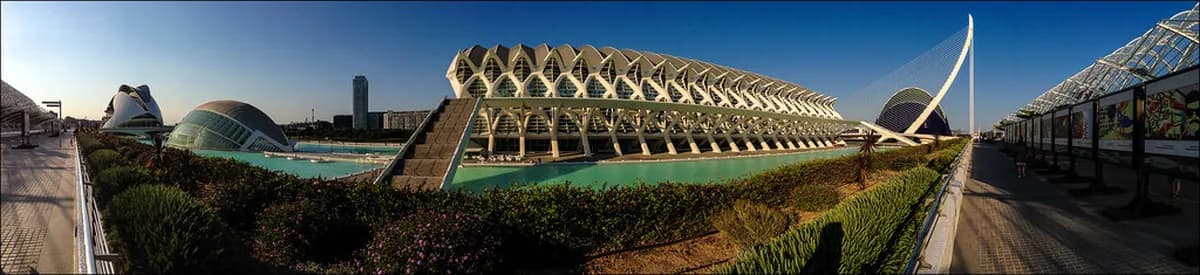
The two City of Arts and Sciences attractions — the Oceanogràfic and the Science Museum — are the most visited paid sites in Valencia, yet they offer only a modest discount. If those are the centrepiece of your trip, the transport savings and municipal museum access are what justify the pass, not the discount at these flagship venues.
Getting Around Valencia: Transport Coverage and Airport Transfers
The time-based Valencia Tourist Card covers all EMT city buses, the Metrovalencia metro network, and trams within Zone AB. This zone covers the entire urban area including the City of Arts and Sciences, the beach at Malvarrosa, and Valencia Airport (VLC). You tap the card or scan its QR code at every validator — no separate ticket purchase is needed.
The airport metro (Line 3 and Line 5) runs to stops Alameda and Xàtiva in the city centre approximately every 15–20 minutes. The first train leaves the airport around 05:30 and the last is around 23:30. Journey time to the centre is roughly 25 minutes. Without the card, a single journey from the airport costs €4.80. The return trip brings the total to €9.60 — that is 38% of the 72-hour card price recovered in airport transport alone.
One transport category the card does not cover: Renfe Cercanías commuter trains. These connect Valencia to Xàtiva (45 min, €3.85), Sagunto (30 min, €3.35), and the broader Valencian region. If your itinerary includes day trips on Cercanías, you will need a separate ticket. City tram Line 4 to Malvarrosa beach is covered. The tourist hop-on hop-off bus is not covered but typically offers a 10% discount for cardholders.
Where to Buy and How to Activate Your Pass
You can purchase the Valencia Tourist Card online via the official Visit Valencia website or through platforms like GetYourGuide. Buying online in advance gives you a QR code immediately that functions as the digital card on your smartphone. This is the most convenient option for most visitors and means no queuing on arrival.
Physical card collection points in Valencia (open 2026):
- Digital kiosks at Manises Airport arrivals hall — 24-hour service, opposite car rental desks
- Airport Tourist Office on the arrivals floor — staffed hours only
- City Hall Tourist Office: Plaça de l'Ajuntament, 1 (46002 Valencia)
- Paz Tourist Office: Carrer de la Pau, 48 (46003 Valencia)
- Joaquín Sorolla Train Station Tourist Office: Carrer de Sant Vicent Màrtir, 171 (46007 Valencia) — kiosk open 06:00–00:00
Note: as of early 2026, home delivery has been suspended. All physical cards must be collected in person. Child discounts (ages 6–12) require in-person collection at a tourist office with ID. The digital card works for transport and museum entry — show the QR code at validators and ticket desks. Activation triggers on first use, not at purchase, which is a meaningful benefit if you buy the night before arrival.
A practical tip: activate the card on your first metro trip of the morning, not in the evening. Because the validity runs on a rolling 24-hour clock from first use, an early activation ensures the full window spans your most active sightseeing hours.
Valencia Without a Pass: The Pay-As-You-Go Baseline
Many of Valencia's best experiences cost nothing with or without a pass. The Jardí del Túria (the long riverside park cutting through the city) is free. The Mercat Central — one of Europe's most impressive food markets — charges no entry. La Playa de la Malvarrosa is free. The Barrio del Carmen and the old city are best explored on foot.
If you are on a walking-heavy itinerary, a 10-journey Metrovalencia T-10 card costs €8.60 for Zones A-B and covers most urban journeys without the tourist premium. For a single day of museums, paying individually (roughly €2 per municipal museum) may be cheaper than the €15 card if you only visit two or three sites. The tipping point is around three municipal site visits plus one or more metro trips.
The pay-as-you-go option makes the most sense for: (a) visitors staying longer than 4 days at a slow pace, (b) anyone whose hotel is walkable to the main sights, and (c) repeat visitors who already know which few paid sites they want and plan everything else around free outdoor spaces and markets.
Which Option for Which Type of Traveller
First-time visitor, 2–3 days: The 72-hour card is the clear choice. You will naturally visit the historic centre, the City of Arts and Sciences, and at least one beach — which means multiple transit rides plus a string of museum entries. The break-even math works easily and the convenience removes constant ticket decisions.
Weekend tripper, arriving Friday evening: The 48-hour card (€20) makes the most sense. Activate it Saturday morning to cover two full days, and use the airport metro on arrival for a small additional cost (single €4.80). Alternatively, buy the 72-hour card and activate on arrival — you have until Monday evening.
Family with children aged 6–12: Card prices for children are roughly 85% of the adult rate. For a family of two adults and two children, the 72-hour cards cost €25 + €25 + €21.25 + €21.25 = €92.50 total. À-la-carte transport and municipal museums for the same family would likely run €110–€130 over three days, giving a saving of roughly €20–€40. Collect in person to ensure child rates are applied correctly.
Long-stay visitor (5–7 days): The time-based cards do not scale well beyond three days. Buy the 72-hour card for the first three days, then switch to a standard Metrovalencia 10-trip card (€8.60) for remaining journeys. Visit museums on free days (Sundays for municipal sites) during the second half of the stay. The 7-day discount card (€12) is only worth adding if you plan to visit Bioparc, Oceanogràfic, or the Ceramics Museum during the final days.
Solo traveller who walks everywhere: Skip the pass. Pay individually for the one or two museums you visit and use the single metro ticket for the airport. Total cost is typically under €15, less than the 24-hour card.
Digital vs. Physical Card: Which to Choose
The digital card — a QR code delivered to your email and displayed in a browser or wallet app — is the default for online purchases. It works identically to the physical card at transport validators and museum entrances. Most validators in Valencia handle QR scanning reliably, including on the metro platform gates. There is no activation fee difference. The practical advantage is instant delivery: book the day before, receive the QR, and you are ready to use the airport metro the moment you land.
The physical card is a tap-to-pay card that works without unlocking your phone. This is useful if you plan to use it frequently at bus validators where fumbling for your phone is annoying, or if your phone battery is unreliable. To get the physical version you must collect in person at one of the tourist offices or airport kiosks listed above. If you buy online and want physical, choose "collect at airport" at checkout.
One scenario where physical beats digital: travelling with children. Managing multiple QR codes on a single phone at a museum entrance while keeping an eye on children is more friction than just handing over cards. If you are collecting physical cards anyway for the child discount, get adult physical cards at the same time.
Deciding between cities? Compare them all in our guide to the best city passes in Europe in 2026.
More on the Valencia City Pass & Nearby Cities
Dig deeper into Valencia: is the valencia city pass worth it.
Comparing other destinations? See the best city passes in Europe, or compare Barcelona city pass · Seville city pass · Madrid city pass.
See all passes in this country: city passes in Spain.
Explore More Valencia Guides
Keep planning your Valencia trip with these guides.
Explore city pass in other cities
Frequently Asked Questions
Is it worth getting a Valencia tourist card?
Yes, it is worth it if you use the airport metro and visit at least three museums. The transport savings alone cover most of the 24-hour card cost. It also includes a free tapa and drink.
Does the Valencia card include the airport metro?
The 24, 48, and 72-hour cards include the airport metro in Zone AB. The 7-day card does not include any public transport. Always check your card type before heading to the station.
Which museums are free with the Valencia tourist card?
Over 20 municipal museums are free, including the Silk Exchange and the Serranos Towers. Major sites like the Oceanogràfic offer discounts rather than free entry. Most are closed on Mondays.
The 72-hour Valencia Tourist Card is the best Valencia city pass for most first-time visitors. At €25 it covers unlimited transport including the airport, free entry to 20+ municipal museums, and a complimentary tapa. Our worked math shows a saving of roughly €11.60 versus paying individually on a standard 3-day itinerary — and that rises with every additional museum visit or metro ride.
The key decisions: do not buy the 7-day card if you need the metro; activate your card at the start of the day, not the evening; and check which attractions give free entry versus a modest 10% discount. For more detail on getting around, see the full worth-it analysis or the comparecitypass.com/blog for other European city pass comparisons.
Free guide: Is the City Pass Worth It?
Our quick-decision checklist for European city passes — the value math, what to watch for in the fine print, and when paying per attraction beats the pass.
You might also like

Continue reading
More guides you'll find useful