Ghent City Card Price: 2026 Cost & Value Guide
See the current Ghent City Card price (€49–€55), what's included, and whether the CityCard Gent break-even math works for your visit in 2026.
On this page
Ghent City Card Price: Is the CityCard Gent Worth It in 2026?
Last updated August 2026, the Ghent city card price starts at €49 for a 48-hour pass and rises to €55 for 72 hours, per the ticket listing De Lijn maintains for the CityCard Gent. That single card covers unlimited De Lijn trams and buses, entry to more than 20 museums and monuments, one canal boat trip, and a full day of bike rental. This guide breaks down exactly what that price buys and calculates the point at which the card beats paying for each attraction separately.
Free guide: Is the City Pass Worth It?
Our quick-decision checklist for European city passes — the value math, what to watch for in the fine print, and when paying per attraction beats the pass.
Ghent City Card Price at a Glance: 48-Hour and 72-Hour Cost
Current Ghent city card pricing runs €49 for a 48-hour CityCard Gent and €55 for the 72-hour version. De Lijn, the transport operator that also sells the pass, lists both tiers directly on its ticket page. That single card bundles unlimited De Lijn transport with entry to more than 20 museums and monuments. It also throws in a guided canal boat tour and a full day of bike rental. Some independent reviews from 2025 quote slightly lower figures, closer to €42 and €48. Prices on tourist passes shift year to year, so confirm the live rate on the official CityCard Gent listing before you buy. For the full purchase links and current terms, see the Ghent City Card overview.
€49 for a 48-hour pass breaks even only when visiting five or six paid attractions total, making it uneconomical for short itineraries of four stops or less.
| Pass | Price | Validity | What it covers |
|---|---|---|---|
| 48-hour CityCard Gent | €49 | 48 hours from first use | Transport, 20+ attractions, boat trip, bike rental |
| 72-hour CityCard Gent | €55 | 72 hours from first use | Same inclusions, extra day to spread visits |
What the CityCard Gent Includes for That Price
Every CityCard Gent tier unlocks the same list of inclusions; only the clock length changes between 48 and 72 hours. A standalone day of bike rental in Ghent typically costs €15 to €20, so that inclusion alone offsets close to half of the 48-hour price. The hop-on-hop-off water tram runs on a seasonal schedule, so check current operating dates before you count on it for a specific day. Every CityCard Gent also comes with a fold-out user guide listing participating sites and how to reach each one by tram or on foot. For opening days, addresses, and a site-by-site rundown, see the Ghent City Card attractions guide.
- Unlimited De Lijn trams and buses, including tram line 1, the museum line that crosses the historic center
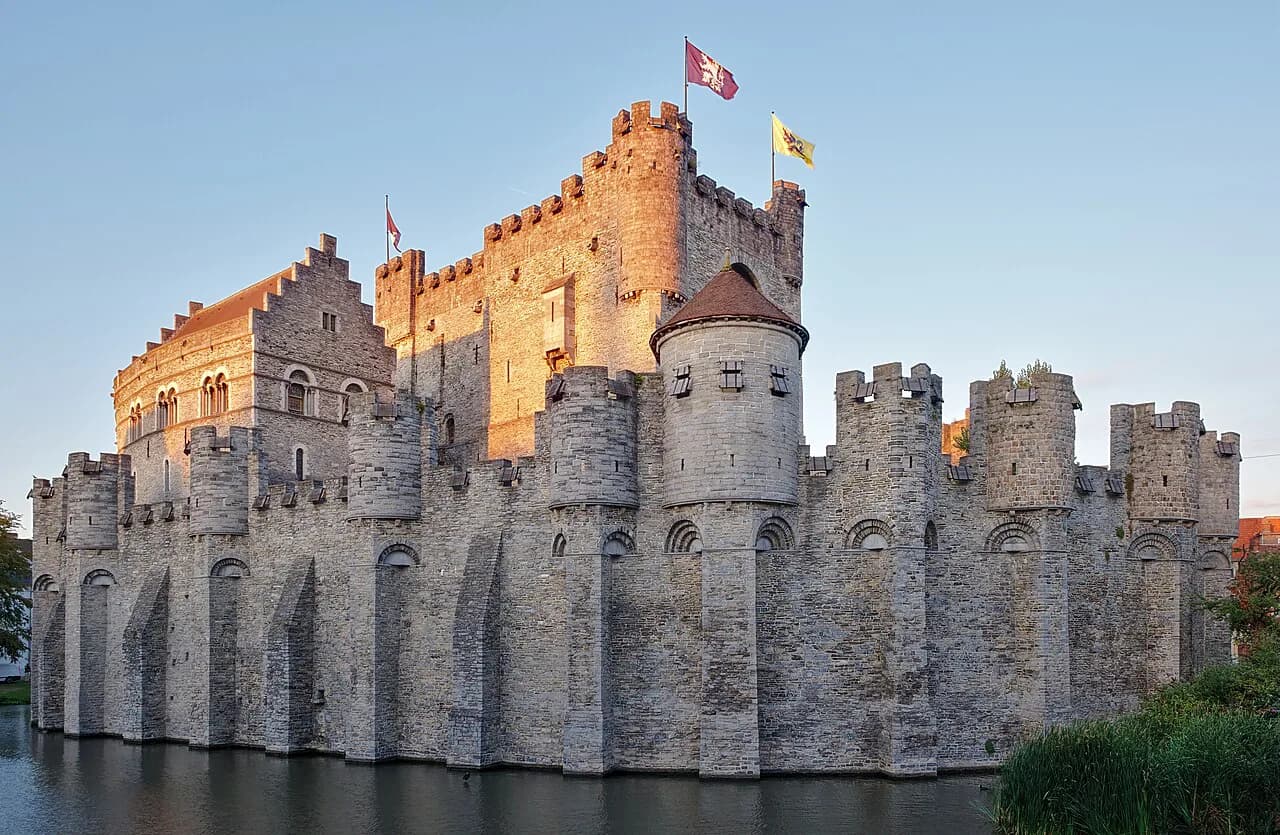
- One-time entry to Gravensteen (Castle of the Counts), Ghent Belfry, St. Peter's Abbey, and House of Alijn
- One-time entry to STAM, MSK, SMAK, the Museum of Industry, the Dr. Guislain Museum, and GUM
- One-time entry to the World of Kina, Hotel d'Hane Steenhuyse, and the Arnold Vander Haeghen House
- One guided canal boat tour through Ghent's waterways
- One full day of bicycle rental
- One day's access to the hop-on-hop-off water tram
- Free entry to temporary exhibitions running at participating museums during your visit
Break-Even Math: Ghent City Card vs Paying Per Attraction
Card value depends on how many paid sites you actually visit within the window. Here is what those same attractions cost per ticket, followed by two sample days stacked against the card price. At four headline stops, paying per attraction is the cheaper route under current pricing, since the card's discounted Altarpiece ticket still costs €2.50 on top of the pass. Add two more paid museums and the math flips: the 72-hour card saves roughly €11 over buying tickets one by one. That gap grows further once you factor in the included boat tour, bike rental, and unlimited transit, none of which carry an extra charge with the card. As a rule of thumb, the CityCard Gent tends to pay for itself once a visit covers five or six paid stops.
| Day plan | Pay-as-you-go total | Card cost incl. discounted Altarpiece | Cheaper option |
|---|---|---|---|
| 4 stops: Castle, Belfry, boat tour, Altarpiece | €46.50 | €51.50 (48-hour card) | Pay-as-you-go, by about €5 |
| 6 stops: add MSK and House of Alijn | €68.50 | €57.50 (72-hour card) | Card, by about €11 |
- Gravensteen (Castle of the Counts): €13
- Ghent Belfry climb: €11
- Guided canal boat tour: €10
- Ghent Altarpiece, full-price ticket: €12.50
- Museum of Fine Arts (MSK): €13
- House of Alijn: €9
The Ghent Altarpiece Discount and Other Price Exceptions
Not every attraction becomes free just because you bought the card. The Ghent Altarpiece, Jan van Eyck's Adoration of the Mystic Lamb, is the main exception. Card holders get €10 off the standalone €12.50 ticket, paying €2.50 instead of full price. St. Bavo's Cathedral requires an online reservation for the Altarpiece regardless of whether you hold the card. Book that reservation before you buy the physical pass, selecting the CityCard option from the venue's own booking dropdown. Every other included site works on a simple show-and-enter basis, with no separate reservation needed. Keep the reservation confirmation and the physical card together, since the ticket desk checks both.
Where to Buy the Ghent City Card and How Activation Works
You can buy the CityCard Gent at several points around the city. Activation follows its own rule, separate from the museum scans. Card scans happen only when you enter a museum or attraction, not on trams or buses. Because transport isn't scanned, you fill in the start date on the back of the card and show it to the driver when boarding. That written start date is what actually starts your 48-hour or 72-hour clock, so pick it carefully. Validity runs in hours, not calendar days, so a card started in the afternoon on a Friday expires around the same time on Sunday for the 48-hour version. Many Ghent museums close on Mondays, so a 72-hour card that overlaps a Monday loses real value from its ticket count. Plan the start date around opening days first, then treat transit, the boat trip, and the bike rental as flexible extras.
A 72-hour card spanning a Monday loses a full day's museum access; since break-even requires five or six stops, timing your purchase for Tuesday–Saturday prevents wasting attraction days.
- Visit Gent tourist office on Sint-Veerleplein
- Participating museums and monuments across the city
- Front desks at hotels in Ghent
- De Lijn ticket sales points
Ghent City Card Price vs Other Belgian City Passes
Ghent isn't the only Belgian city selling a tiered visitor pass, and pass economics don't transfer automatically between cities. Brussels runs its own Brussels Card program, with different pricing tiers and a different attraction lineup than the CityCard Gent. The Brussels city pass guide breaks down that program's current cost and inclusions in full. If a trip covers both cities, work out each break-even point separately, since one pass's math rarely applies to the other. A dedicated Ghent vs Brussels city pass comparison lines the two up side by side. Travelers building a wider Belgium itinerary can scan the Belgium city passes overview before booking anything. Bruges runs a similar scheme of its own, covered in the Bruges city pass guide. Antwerp's version gets the same treatment in the Antwerp city pass guide.
Who Should Buy the Ghent City Card? Decision Guide and Final Verdict
That last point matters for budgeting. Most Ghent museums waive admission for under-18s, so buying a child a CityCard Gent mostly pays for transit, the boat tour, and bike rental rather than museum entry. Weigh that against a cheaper single De Lijn transport ticket if a child won't use the boat, bike, or water tram. Adults traveling with kids often do better buying one adult card each and paying for transport separately for children. Timing also affects the payoff. Many Ghent museums close on Mondays, so a 72-hour card spanning a Monday effectively loses one day of attraction value. Start the clock on a Tuesday-through-Saturday window where possible to get full use from every included site. On current pricing, the CityCard Gent tends to break even around five or six paid stops within the window, not the three or four some older reviews suggested. Below that count, paying per attraction and a single De Lijn ticket usually works out cheaper. Above it, the card wins on both price and convenience, since you stop counting tickets altogether. For the general math behind any city pass purchase, the city-pass value framework covers the same break-even logic used above. Travelers stacking Ghent into a longer Europe trip can compare formats in the 10 Best City Passes in Europe: 2026 Comparison Guide roundup.
- Best for: solo travelers and couples planning four or more paid museums or monuments within the window
- Best for: visitors staying outside the historic center who will actually use unlimited De Lijn transport
- Best for: anyone planning the boat tour, a day of cycling, and the water tram anyway
- Not for: a short stopover of a few hours built around one or two sights
- Not for: travelers who plan to walk everywhere and skip public transport entirely
- Not for: families whose children under 18 already get free entry to most Ghent museums
Buying Online vs In Person: Choose Before Your First Visit
The CityCard Gent is a physical pass, so plan its collection before scheduling your first attraction. Buy it from the Visit Gent tourist office on Sint-Veerleplein, at participating attractions, selected hotels, or De Lijn sales points. Ask the seller to confirm the current participating locations if you are arriving late or on a Sunday.
Buying in person works well when you want to start sightseeing immediately. It also lets you check museum opening days with staff before writing a start date on the card. This matters when a Monday falls inside a 48-hour or 72-hour window.
- Pick up the card before your first timed Altarpiece reservation.
- Keep the card with your Altarpiece booking confirmation.
- Do not write the start date until you are ready to begin the validity window.
If your accommodation is outside the centre, verify its reception can sell the card before relying on that option. The tourist office at Sint-Veerleplein is beside Gravensteen, making it a practical pickup point before a first day in the historic centre.
Frequently Asked Questions
What is the current Ghent City Card price?
As of the CityCard Gent's own pricing, the 48-hour pass costs €49 and the 72-hour pass costs €55. A few 2025 write-ups list lower figures, around €42 and €48, so treat those as dated. Confirm the live rate on the official listing before you buy, since tourist-pass prices change periodically.
What does the Ghent City Card price include?
It covers unlimited De Lijn trams and buses plus one-time entry to more than 20 attractions. Named highlights include Gravensteen, Ghent Belfry, STAM, MSK, and SMAK. The price also bundles one guided canal boat tour and a full day of bike rental. A day's access to the hop-on-hop-off water tram is included too, though that service runs on a seasonal schedule.
Is the Ghent City Card worth it for a short visit?
It depends on how many paid sites fit into your day. At four headline stops, current pay-as-you-go pricing actually beats the 48-hour card by around €5. Add two more museums and the card starts winning by roughly €11, before counting the free boat tour, bike, and transit.
Do children need a Ghent City Card?
Usually not. Most Ghent museums already give free entry to visitors under 18, so a card mainly buys a child transit, the boat tour, the bike rental, and the water tram. Compare that bundle against a single De Lijn transport ticket before buying a child's card.
Is the Ghent Altarpiece free with the CityCard Gent?
No. The card discounts the Altarpiece ticket from €12.50 to €2.50, a €10 saving, but it does not waive the fee entirely. St. Bavo's Cathedral also requires an online reservation for the Altarpiece regardless of the card, so book that slot before your visit.
When does the Ghent City Card's validity window start?
Card scans happen at museums and attractions, not on trams or buses. Because of that, you write the start date on the back of the card and show it to the driver when boarding. That date starts the 48-hour or 72-hour clock in hours, not calendar days, so a Monday closure inside that window can cost you a planned museum stop.
Free guide: Is the City Pass Worth It?
Our quick-decision checklist for European city passes — the value math, what to watch for in the fine print, and when paying per attraction beats the pass.
You might also like
Continue reading
More guides you'll find useful